Making organizational integrity mean something real.
For twenty years I’ve gotten strangers to change what they do. Loadmap turns that instinct inward, on the organization whose behavior you keep trying to fix, and that keeps changing back. Take it for a test-drive by clicking the logo below.

Loadmap is a diagnostic tool I developed to read how an organization actually behaves, rather than how it describes itself. It gathers insight from the people inside the structure, staff and leaders, and maps where the organization’s stated intent and its real behavior come apart. The finding is structural: when organizations act against the values on the wall, the structure usually enabled or forced that the move. Loadmap shows where, and what improvements or interventions have a real shot at fixing underlying issues so that they don’t keep coming back.
Linden’s Lens
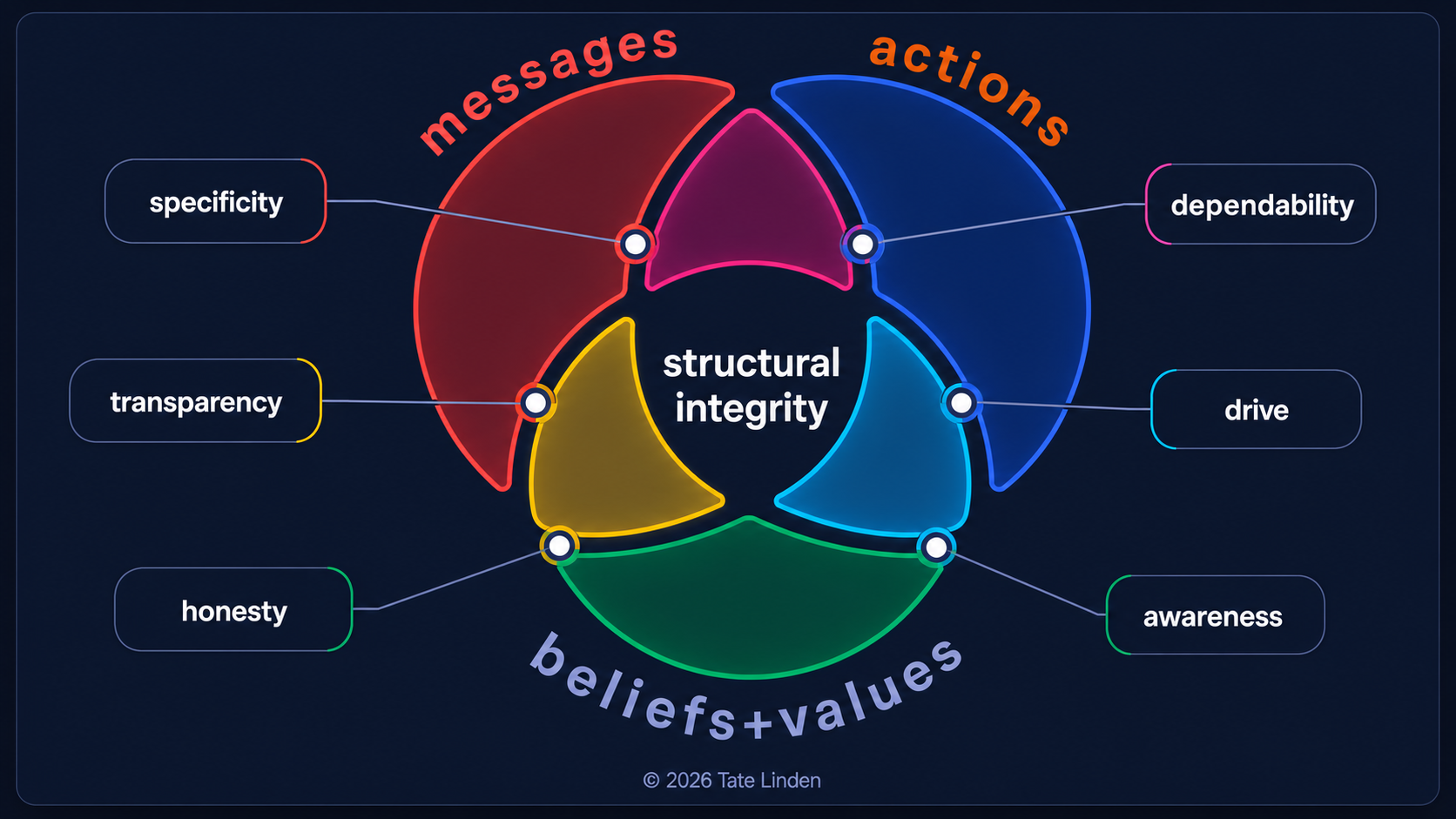
The Lens is how I read and analyze behavior. It looks at three things side by side: what people believe and value, what they say, and what they do. When all three match, an organization (or person) has integrity in the load-bearing sense of the word, the way a beam has integrity. When they drift apart, the Lens shows exactly which pair split, which is a far more useful finding than a low score on a culture survey.
The Bridge
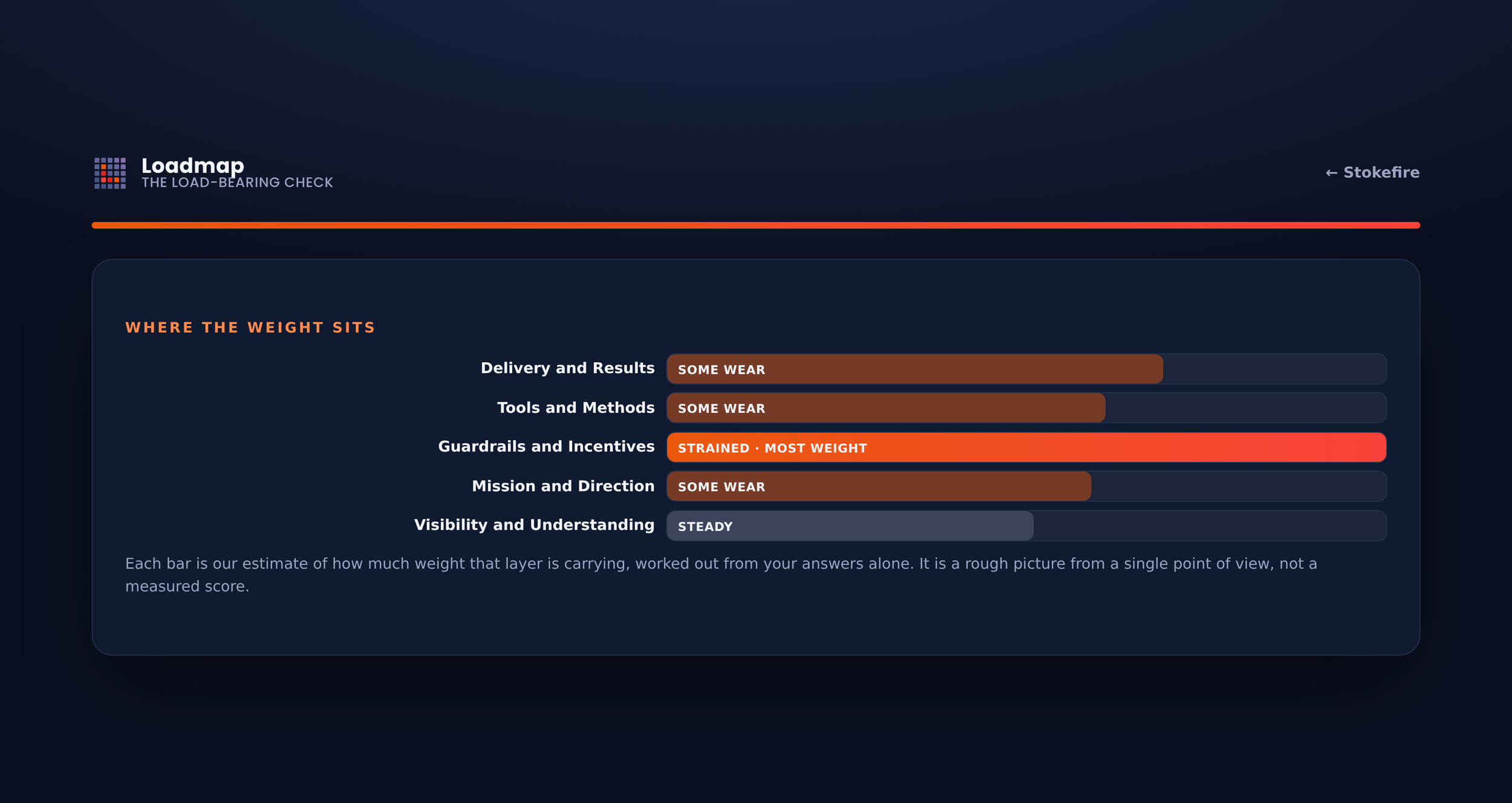
The Bridge is where the diagnosis is made visible. It treats an organization as a load-bearing structure with five layers, from how it senses what is happening around it to how the visible work gets done under deadline pressure. Strain that shows up in daily execution almost always starts deeper in the structure. The Bridge locates the layer that’s actually failing, so the fix can target the true cause instead of the symptom.
Archetypes
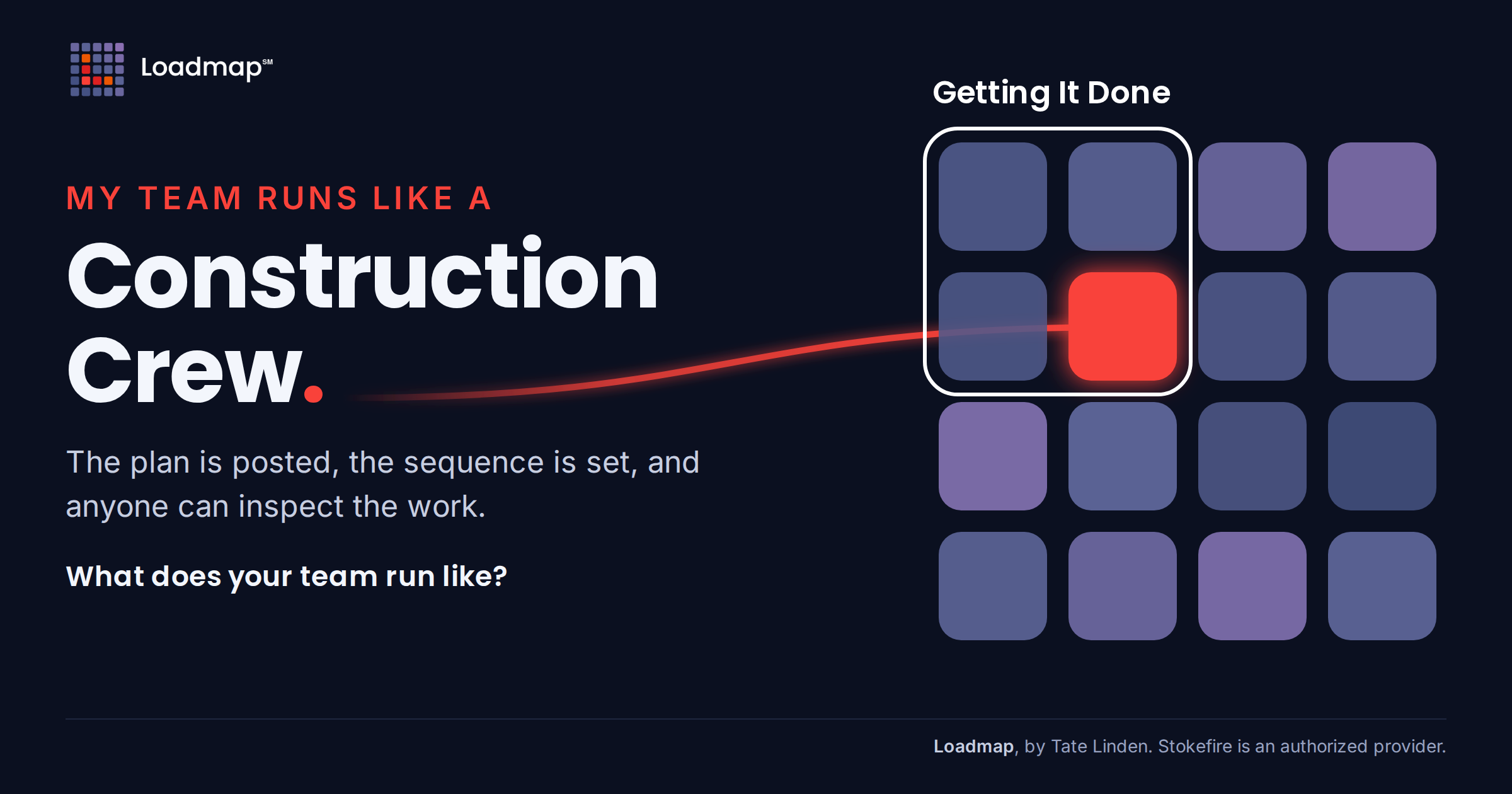
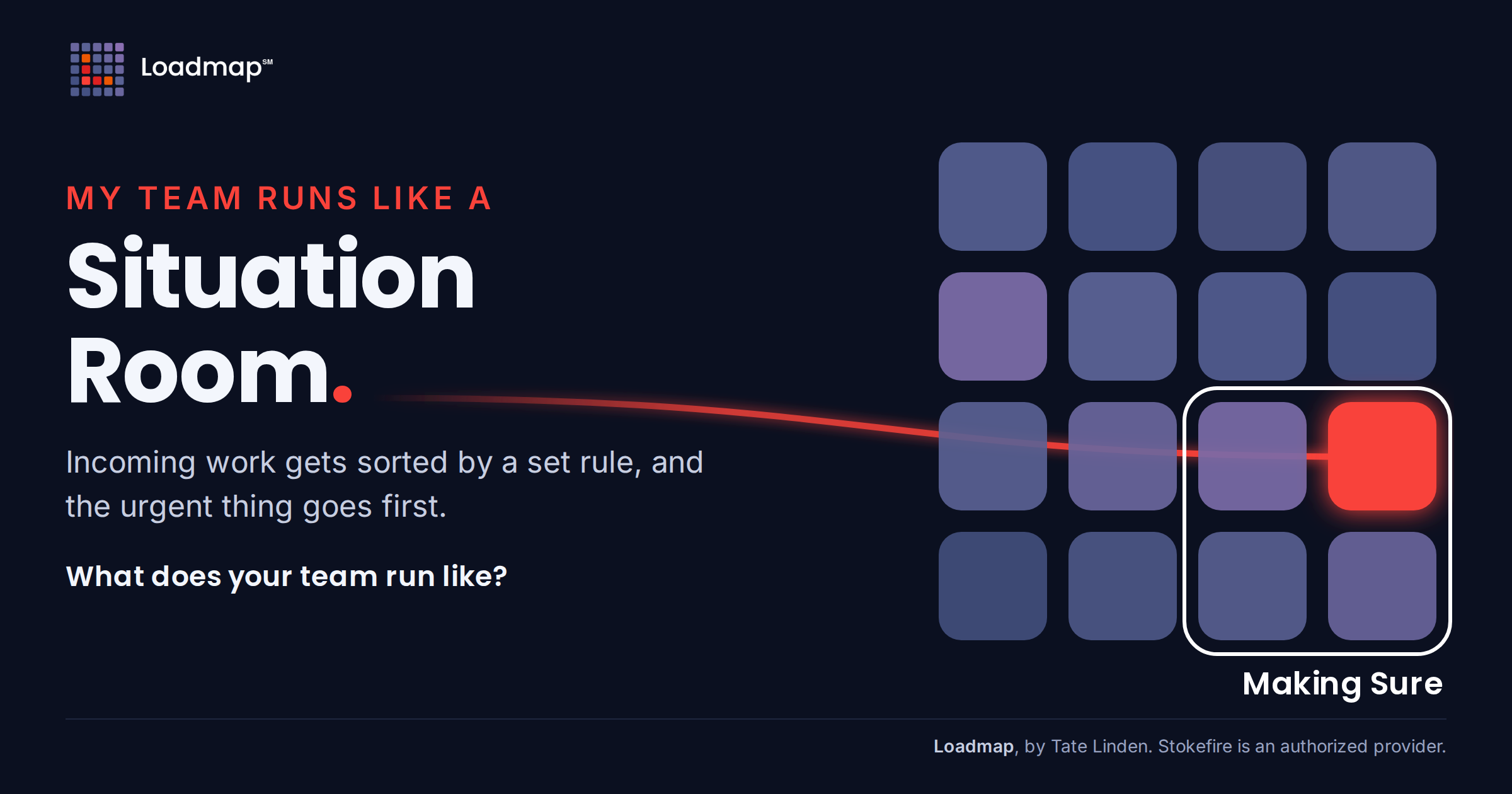
Archetypes give the patterns names. Every organization has a default way of operating, and Loadmap starts by resolving it into one of sixteen recognizable patterns, each with real strengths and predictable failure modes. Naming the pattern lets a team talk about what the system is doing instead of who is to blame, which makes honest conversation possible. Each type has four unique ways of operating, leading to sixty-four unique profiles rather than the traditionally limiting sixteen, allowing for targeted recommendations instead of the broad strokes offered by the common 4×4 matrix solutions.
The work starts with analysis. It ends with solutions that stick, so you fix once instead of repeatedly, and can get back on the path to where you’re trying to go.